Chronicle VI Post D-Day
“Dec 13 Left for Cherbourg.” In the days following Christmas 1944, my father recorded a brief note, one that stood apart from the rhythm of his daily memorandum entries. It did not describe a destination. It did not reflect on the day. It simply recorded what had been seen along the way.
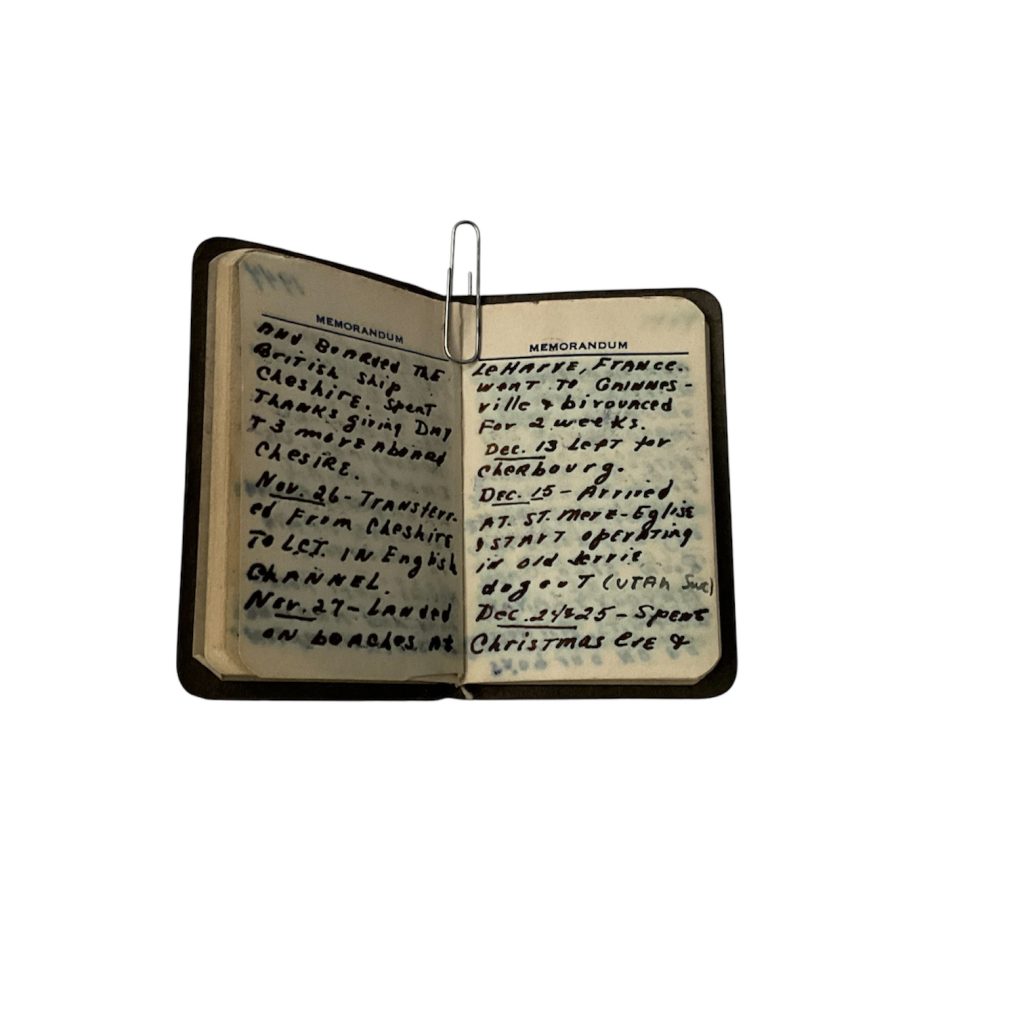
Memorandum Transcript
Dec. 13 – Left for Cherbourg
Dec. 15 – Arrived at St. Mere-Eglise to start operating in old Jerrie* dugout (Utah Save)
Dec. 24 & 25 – Spent Christmas eve &
Historical Note:
Cherbourg,France heavily damaged as the Germans withdrew, was the first major port secured by Allie forces after D-Day. Its capture essential to sustaining the advance across France.The Battle of Cherbourg (June 6–27, 1944) was a crucial World War II battle where American forces captured the vital deep-water port, securing a essential logistical hub for liberating France. US troops, led by Maj. Gen. Lawton Collins, seized the city on June 27 after brutal combat against heavily fortified German defenders.
The siege lasted from shortly after D-Day until June 27, 1944, featuring intense combat in the hedgerows of the Cotentin Peninsula.†
(†Warfare History Network )
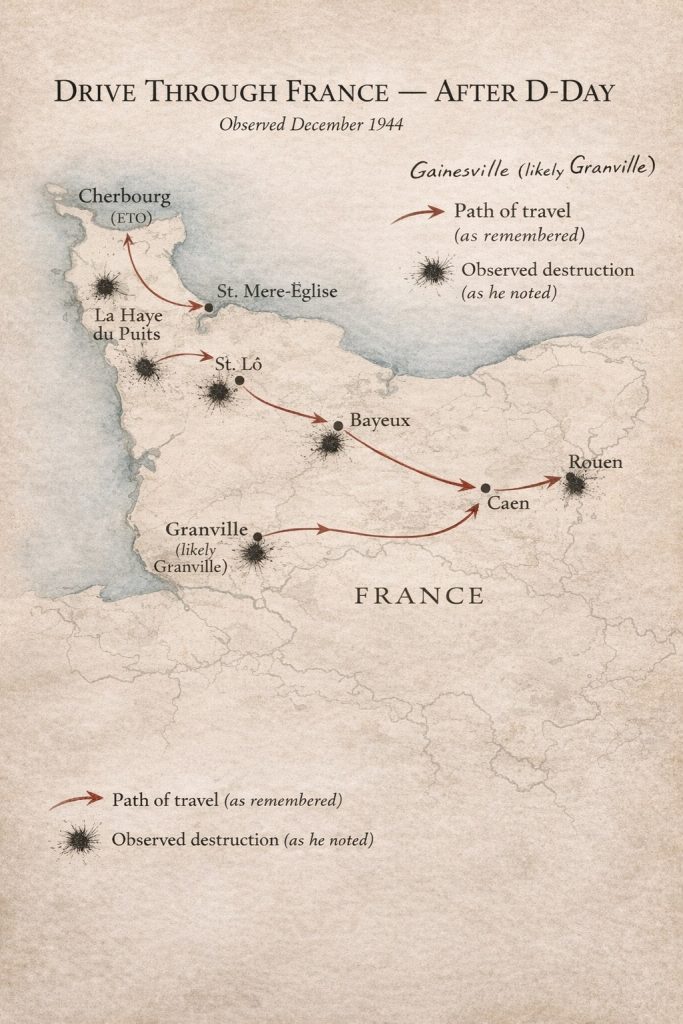
The towns are listed simply one after the other. When placed together, they form a path.
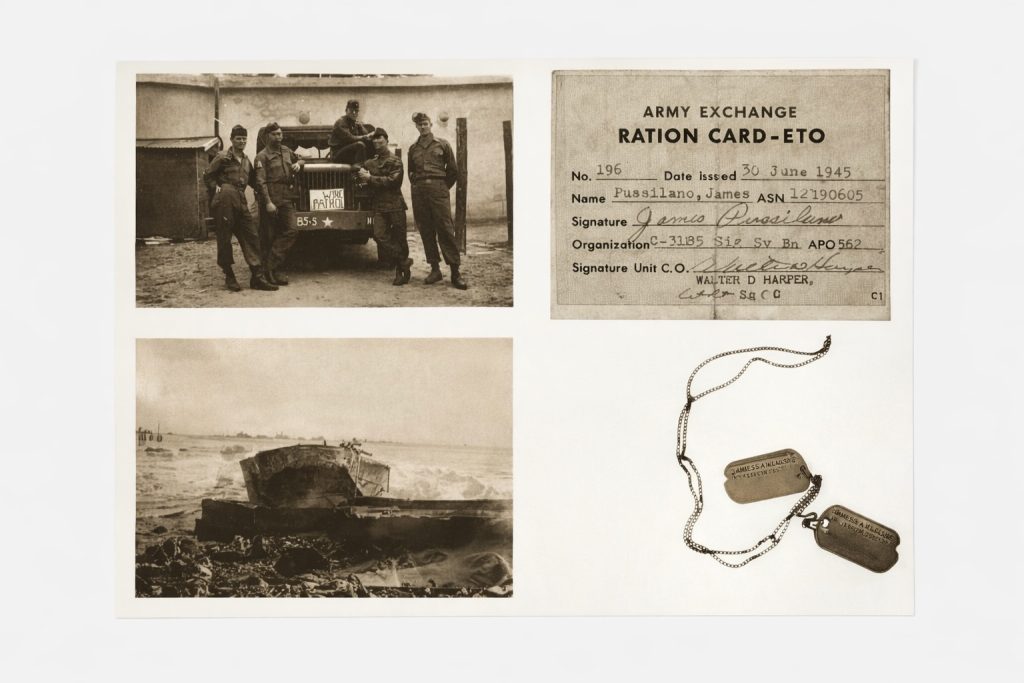
Historical Artifacts from my father’s files
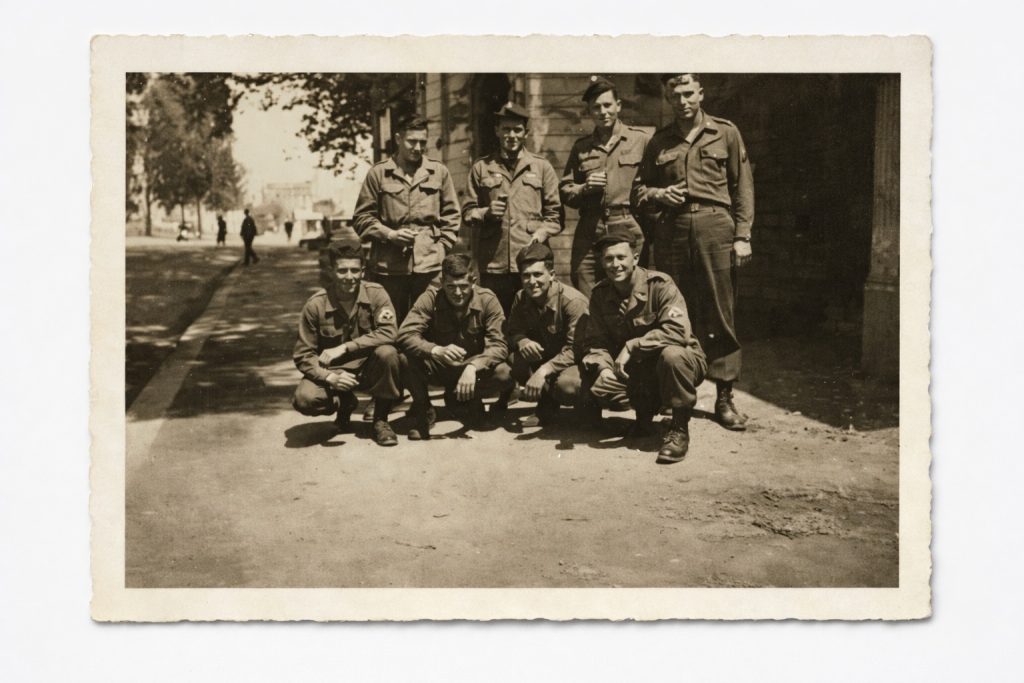
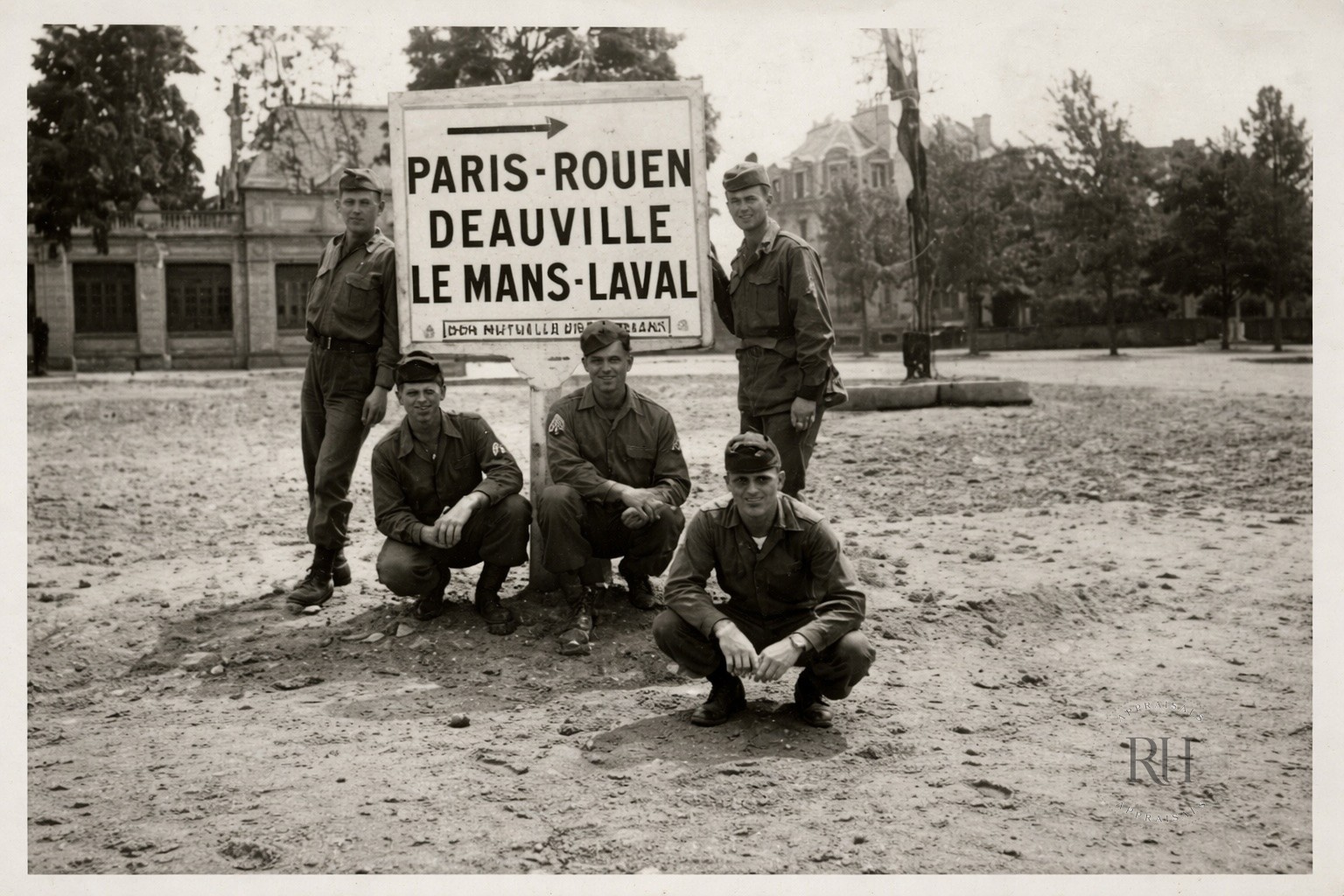
Signal Corps. Soldiers in my Father’s Platoon Sharing a Beer in Caen, France
-Memorial Day 1945
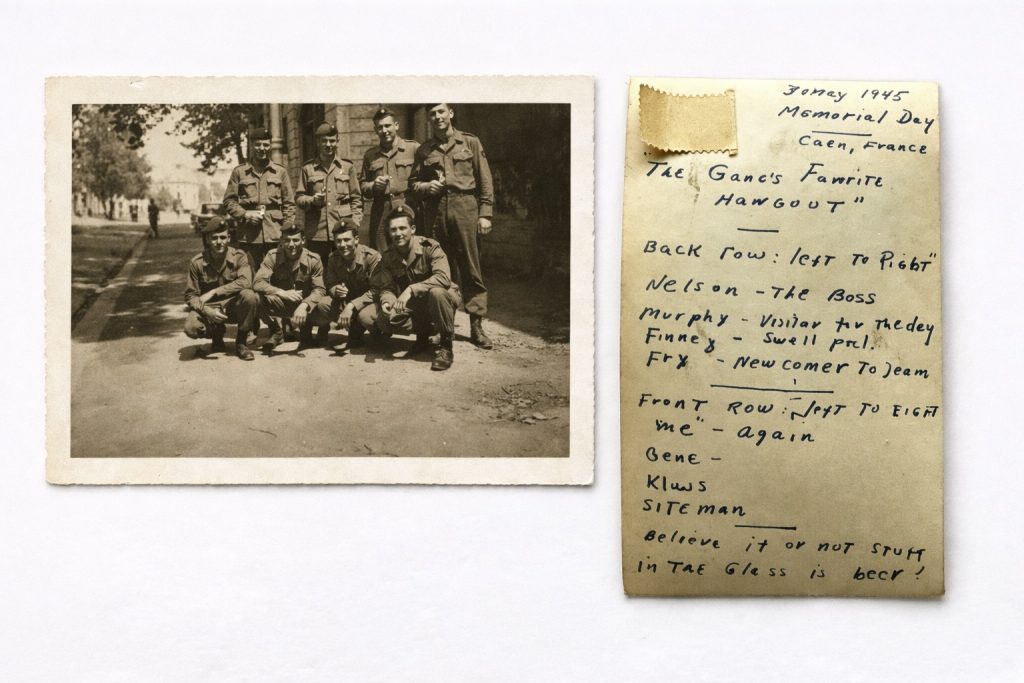
Reverse side of the Platoon Photo my Father Recorded