
January 19, 1945 – The work was rarely seen. But it carried everything forward.
The War moved on. The damage did not…
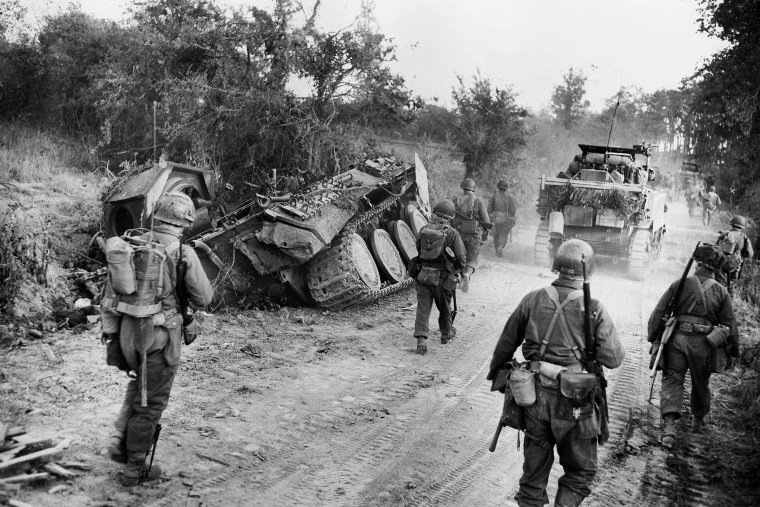
Photo Credit: U.S. infantry pass German tanks as they advance Carentan in Normandy via Getty Images
He left Sainte-Mère-Église and traveled inland, moving through towns that no longer resembled what they had been. Carentan, Isigny-sur-Mer, Bayeaux arriving in LeMolay, France.
Roads carried him past what remained – structures broken, streets altered, the imprint of recent fighting still visible.
The movement was continuous. The entries remained brief.
He recorded little.
But he kept moving.
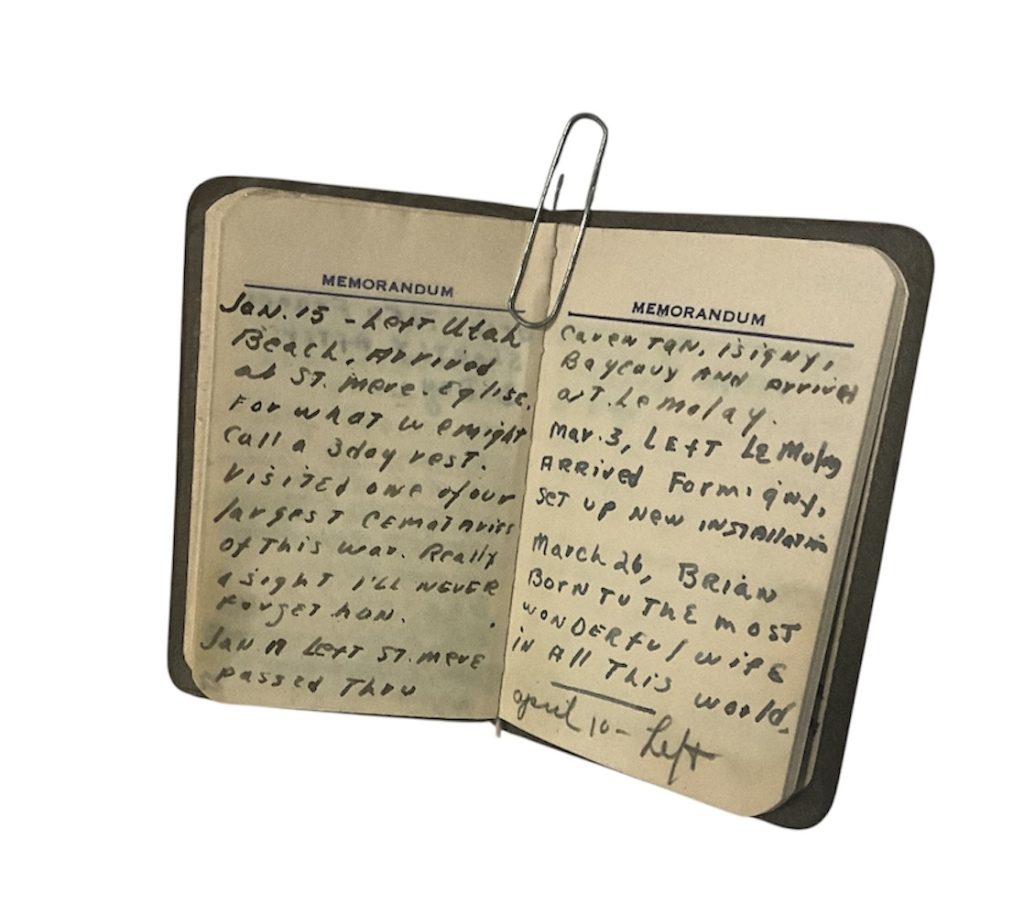
Memorandum Transcript
Jan 19 Left St. Mere passed thru Carentan, Isigny, Bayeaux and arrived at LeMolay.
Historical Notes:
In January 1945, my father’s Signal Corp. unit moved forward ahead of the 82nd and 101st Airborne on the route that passed through towns that had only recently been liberated following the Normandy campaign.
Carentan, France, secure after intense fighting between American airborne forces and German units, became a critical link between Utah and Omaha Beach.
Isigny-sur-Mer, France, heavily damaged during the Allied advance, served as a key passage inland.
Bayeux, France, the first major town liberated after D-Day, remained one of the few largely intact centers in the region.
He (my father) continued inland to Le Molay-Littry, France, where installations were established following the advance of Allied forces.
These locations formed part of the advance depicted in BAND OF BROTHERS, where airborne units moved through Normandy and into occupied France following D-Day.
My father later shared with us, that he followed these same routes ahead of advancing units, installing communications across recently secured ground.
What was written simply…was part of something far greater.
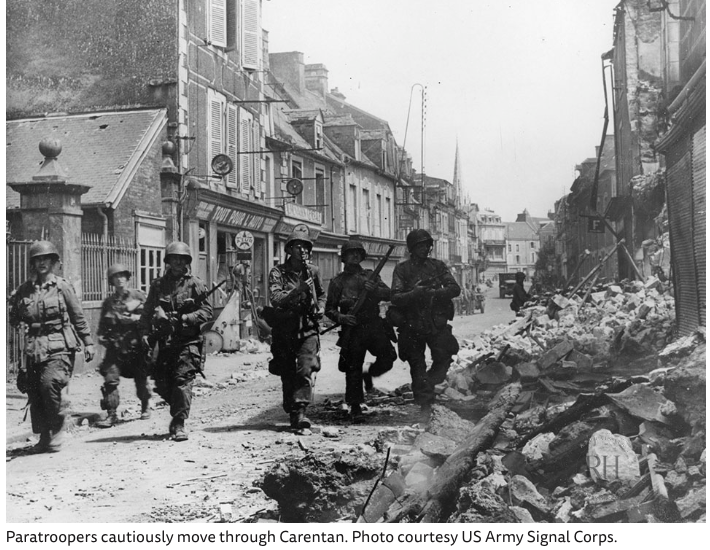
*(Historical context informed by source material):
https://www.nationalww2museum.org/war/articles/101st-airborne-carentan-mitch-yockelson

Turn the page